Monday, May 23, 2011
Tuesday, April 12, 2011
Wednesday, March 16, 2011
All those airport screenings should count as mammograms.
That's the least they could do for us. They should give us copies and we could take them to our doctors, dentists, etc. They could hire a doctor at the airport that could give us a report at the end of the screening
I.r. -- Marin Say...I didnt even think of that..i gotta go in July. Maybe I should gt in line with a bottle of shampoo, gt my xray then kicked off. Hmmm.
Susana Cook-- with a bottle of shampoo and a pair of tweezers you might even get your dental records up to date.
I.r. -- Marin Damn..i made an appt for that too!
Susana Cook -Are you going to check a bag? Do you want a reading or copy of your screening? Both breasts, full mouth, full body?
I.r. Marin Hmm..what should I bring if I need a CAT scan? I also need to check for Osteoporosis...i hear airport screeners are the best. And what if I want to get a second opinion..which airport do i go to for that?Friday at 7:46am · Unlike · 1 person
Susana Cook -- CAT scan only in international flights. Make sure you carry fresh fruit, mosquitoes and tell them that you spent a lot of time in a farm in close contact with sick looking animals
I.r. Marin -- i might also need massage therapy..so what do i do to get tossed around by burly security officials?
Susana Cook -- I.r as a Latina lesbian you should get your massage therapy without asking. A Che Guevara tee shirt might help though. Otherwise you can hide a coin in your pants. I also have a tee shirt that Fulana gave me: Not Gay as in Happy but Queer as in Fuck You. It has a picture of a woman pointing a gun. It's great for airports.
I.r. Marin -- Ur right I should get it without asking..lol. I do have the Che socks, however...i think i should lose the military jackets. After all, I dont want to be tackled before I get on line!

Thursday, February 03, 2011
Friday, January 21, 2011
Suddenly she realized that she had a dead tongue in her mouth
Hint Fiction
By Susana Cook
I was a kid. I don’t remember how old I was but I remember the house. It was a beautiful house. Andrea, a friend from school invited me over for a play-date. I was fascinated; everything was so different in her house. It was clean and organized. They were all sitting at the table at the same time and they were kind of dressed up, her mother and her stepfather I mean. We had to call him ‘sir’. The table had nice plates, cutlery and glasses. They also had a maid who was serving us at the table. She was treating me with so much respect, as if I was an adult or her boss, like them. She put some food on my plate. It was delicious and different. I never ate anything like that before in my life. It was a tender and tasty meat. What is my mother cooking? I thought. She never made anything like that for me! I was embarrassed to ask but I liked it so much I wanted to know what it was. I wanted my mother to cook it for me. This is delicious, I said, what is it?
And her mother said a word that I couldn’t understand. What is it? I asked again
- Tongue, they said
- What?
- Tongue
- Tongue like a tongue?
- Yes, like a cow’s tongue
- I am eating a tongue?
- Yes, you are eating a tongue
I wanted to spit on the table what I had in my mouth. But everything and everybody was so refined. I just knew that I could not swallow a tongue and I could not take the contact of my tongue with the dead cow tongue anymore. I didn’t want my face to show disgust. I couldn’t talk to excuse myself and go to the bathroom to spit that out. Gosh, do I have to swallow this? If I do I will throw up. If I spit this out they will be so offended.
I couldn’t take it anymore. I got up to go to the bathroom but I didn’t know where it was. I was walking around the house with that tongue in my mouth and I couldn’t ask them where the bathroom was. I finally opened a door and there it was a beautiful toilet where I could spit the fucking tongue out. I did. I washed my mouth but I couldn’t get the feeling out for a long time. Every time I was thinking about it, it was making me nauseous and disgusted. I had to wash my mouth again.
Sunday, November 07, 2010
Wednesday, November 03, 2010
Animals Onstage
by Susana Cook
From spiritual creatures and fabulous mythic beasts to live theater props and art supplies — tortured, killed, cut into pieces and reassembled – the current role of animals in the world of art brings up ethical issues of artistic freedom versus animal ethics and make evident the complications inherent in representing the Other.
I propose a look at the relationship that humans have created through time with animals in the spaces of Western philosophy, theater, art and performance, in an effort to understand the current trend of animal abuse in the work of several highly celebrated contemporary artists. I will discuss the work of selected ancient poets and philosophers who dealt with the issue of the animal and contemporary artists who present animals onstage or use pieces of them in their work.
I begin by engaging in a brief account on the history of ideas regarding animals to prove that (contrary to popular belief) historically, people have been sensitive to the suffering of animals, and we have proof of this in prominent. The “origins of man” are usually cited as a justification on the abuse and consuming of animals: for example, in dominant thought, people usually refer to cave men and their dietary habits as a way of normalizing the killing and eating of animals as a primal human activity. Cave men were most likely killing animals to survive, and at best meat composed a small percentage of their overall diet, but much of philosophical thinking on the issue of animals distances itself significantly from the practices of troglodytes.
Ancient Roman and Greek philosophers like Ovid, Pythagoras, Empedokles, Epicurus, Plutarch and Seneca were all vegetarian who gave us a strong legacy on animal ethics. In the field of contemporary playwriting, I will look at Edward Albee’s The Goat and Martin McDonagh’s The Lieutenant of Inishmore. Both plays bring animals to central roles and explore the complicated issues that arise when presenting animals in close relationship to humans.
I will then talk about the work of Argentinean playwright/director Rodrigo Garcia, German theater director Thomas Ostermeier, visual artists Marco Evaristti (Chile), Guillermo Vargas (Costa Rica) and Demian Hirscht (England), all male artists who use animals in their artistic productions. I argue that these artists are not an exception but exponents of a trend in the theater world that celebrates animal abuse as artistic genius.
Animals have historically served all kinds of purposes for humans; they provided company, food, transportation, clothing, entertainment and became objects of human power and anthropocentrism. They have been objects of visual art, literature, fables, theater, circus acts, performance art, paintings, cinema, and theater plays. Animals have been made into healers, gods, creatures without a soul, recipients of deep knowledge, enslaved, tortured, killed, mutilated and eaten.
Many prominent ancient Greek and Roman poets and philosophers rejected the abuse of animals as immoral. Pythagorean ethics, for instance, first appeared between 490-430 BC with a desire to create a universal and absolute law including injunctions not to kill "living creatures," to abstain from "harsh-sounding bloodshed," in particular animal sacrifice, and "never to eat meat."
Empedokles (?480-430 B.C) was a Greek philosopher and scientist who continued the Pythagorean tradition. He left no doubt about his opinion of flesh foods: "Will you not put an end to this accursed slaughter? Will you not see that you are destroying yourselves in blind ignorance of soul?" He wrote his doctrines in his poems “exhorting the world to abandon the foul diet of blood." He once exclaimed, "Will ye not cease from evil slaughter? See ye not that ye are devouring each other in heedlessness of mind?'"
The Roman poet Ovid died in A.D. 18 when Jesus was still a very young man. He wrote the famous Metamorphosis as a series of poems where animals and humans mutate constantly into each other. He repudiated animal sacrifice and human carnivorism as a perversion of human nature. In Metamorphosis he writes: "From whence such hunger in man after unnatural and unlawful foods? Do you dare, O mortal race, to continue to feed on flesh? Cease, I adjure you, and give heed to my admonition”. Ovid also condemned the killing of the gentle animals who had no defense against man's savagery. He asked: "To what wicked habits does he accustom his palate...who cuts the throat of a calf, turning a deaf ear to its piteous moans. Or, who has the heart to pierce the throat of a kid which utters cries like those of a child, or, who can feed on the bird whom he had fed with his own hand?"
Even though the poets and philosophers of antiquity wrote extensively about the suffering of animals, things changed for the worse for un-human creatures when the definitions of men became a dialectic model of animals as opposite to humans. In 1637, in his Discourse on the Method, Descartes defined animals as machines lacking all reason and thought, as creatures without mind and sensory experience, and as such unable to feel pain. His famous quotation Je pense, donc je suis (I think, therefore I am) was probably the beginning of a heavy omen that fell on animals as creatures inferior to the ‘thinking’ humans.
As a result of all these contradictory traditions we grow up immersed in a very complicated relationship to animals. As kids, many of us had loving pets, and we often heard stories featuring fables that make animals speak, feel, and act as recipients and porters of hidden knowledge and wisdom. At the same time, we open the fridge and find some animal in pieces, or we walk through supermarket aisles that look like an animal’s morgue and we are not supposed to cry or be horrified; we just have to buy it.
All these contradictory feelings became pacified and normalized. The animal is the Other, from a different species. It is not fully clear what’s the proper way to treat them. These contradictions reveal themselves often in works of art.
By making the death of the animal the tragedy, Edward Albee’s play The Goat is one of the few examples of contemporary theater that dares to move the presence of the animal to a complicated zone of equality to humans, challenging our definition of the animal’s otherness. He places the main character, Martin, at the limits of his humanity by involving him in a love affair with a goat. There are plenty of stories of humans and animals loving each other, but in most of them the animal is subjugated to the human; it’s either a pet, a work animal, or a wild animal that could or should be killed. But in The Goat the animal is moved up to a strange category of equality to a human being.
Albee adds the subtitle: Notes Towards a Ddefinition of Tragedy. By exploring what is a tragedy or who’s death constitutes a tragedy he is the boundaries of what could be considered human or the relationship of human beings with un-human beings.
The play is all the time on the verge of comedy. A human loving an animal in a romantic way it’s tragic and at the same time funny. The death of the goat becomes then the moment when we will measure the tragedy. It’s just an animal. How can you take its death seriously?
Martin, a New York architect, will be the character that will disorganize and rearrange the established hierarchical relationship between animals and humans. He starts the play in a daze, not being able to remember anything. He can’t relate to the way things are, he can’t remember how they were because all his values are being challenged. By moving an animal to a place of equality the organized sense of his own human-ness gets challenged and all his moral assumptions have to be reexamined. The play will end in tragedy because the order he intended to create is not viable under the present scheme of things where animals and humans exist within relations of power.
Martin is so distracted that he can’t even remember his name; he acts like somebody in love. That could be seen as funny if you think that the object of his love is a goat, but it could also be read as somebody who has lost the possibility of reading reality the same way and as such needs to rebuild his inner and outer universe because he can’t remember the way things were - even his own name.
Martin, married to Stevie, tries to confess to his friend Ross. He is embarrassed and confused; he knows that what is happening is wrong. He explains how loyal he has always been to his wife and how deeply he feels for her. Until one day he saw ‘her,’ Sylvia. Ross then tells the news to Martin’s wife and his son Billy, and the tragedy begins. Stevie admits that her first reaction to the news was to laugh “ at the awfulness and the absurdity of it.”
The play keeps traveling on a thin line between comedy and tragedy. Martin and Stevie wrestle with definitions. Martin calls the goat Sylvia. Stevie denies her a name, trying to take the goat back to the animal kingdom, where she exists as an object, an “it,” stressing a line of division that obviously doesn’t exist anymore in her husband’s mind or soul. Stevie realizes that what her husband has done could not be undone. They all know that the rules have been broken but they don’t know what’s next after such an affair.
At the end of the play, Stevie enters, dragging a dead goat. The goat’s throat is cut; the blood is down her clothes and on her arms.
The situation between Stevie and Martin could very easily be translated to any situation of a person falling in love with the wrong or forbidden person, or breaking apart a marriage through romantic infidelity. The fact that the other is a goat makes the reader think about bestiality, but also about otherness.
By killing the goat, Stevie restores order. This is not only because her husband doesn’t have a goat lover anymore, but because the goat became fully an animal, dragged through the streets by a human.
In The lieutenant of Inishmore by Martin McDonagh the figure of the cat plays a very important role, introducing the humor in the play because animal suffering can be ultimately ‘funny’. Padraic is a heartless torturer. Everybody is terrified of him. He commits the most brutal acts against people as lieutenant of the Irish National Liberation Army. He has no compassion or empathic feeling for any human. But he adores his cat.
The cat is the irony of the play. Torture becomes funny because it is compared all the time with the compassion and love Padraic feels for his cat. After seeing Padraic removing the nails of his victims, cutting their nipples, wielding a cut-throat razor in front of a victim hanging upside down, with his hands bloody, the image of his little friend Mairead shooting the eyes out of ten cows provides the laugh. The violence against humans is paralleled with the violence against animals to make the play funny. If the only violence shown onstage was Padraic torturing his human victims, arguably it would not be read a funny play. But because torturing animals is in a way funny to most audiences, the extreme violence of the play gets softened. The contrast is also underscored by the fact that Padraic is a super macho guy and the fact that he loves his little cat is kind of a feminine thing about him.
Even if in The Goat and The Lieutenant of Inishmore no real animals need to be hurt or killed, these plays are important examples of our complicated relationship with animals’ pain and suffering. In both cases the presence and death of the animal is crucial to the plot.
But sometimes animals do die. They become the victims of artists intending to create a sense of shock in theater and performance.
Rodrigo Garcia is a theater artist from Argentina, living in Spain. His company is called “La Carnicería” (The Butchery) and his work honors the title of his company by featuring all kinds of torture and killing of animals. Rodrigo Garcia’s father was actually a butcher, so Garcia grew up surrounded by pieces of dead animals that constituted his father’s job. He obviously normalized that relationship to animals and decided to follow his father’s footsteps and makes a living in the arts by exploiting animals as well. Several animal rights groups have brought attention to the gratuitous mistreatment and killing of animals in his work and managed, in some cases, to stop some of his performances.
Still, Garcia’s work is very celebrated in prominent theater circles. In 2009, Garcia won the XIII Europe Theatre Prize for his play Matar Para Comer (Killing to Eat). The play features a lobster that will slowly die in front of our eyes. An actor hangs a live lobster from a hook in the center of the performance space and attaches a microphone to the animal’s chest. We can see the animal squirming, suffering, in agony, and we hear the lobster’s heartbeat amplified through a microphone stuck to its chest. The slow death is an awful thing to witness but it becomes even worse because Garcia extends the agony and suffering of the lobster. As the animal begins to die, and we can hear the heartbeats slowing down, the actor throws water from a bottle on the hanging lobster to revive it and then let it suffocate again. He repeats this procedure two or three times. He then takes the dying lobster off the hook, stabs it with a knife, cuts it in pieces, cooks it and eats it.
Before seeing this “performance” in December 2007, I also attended Garcia’s play Ronald McDonald at The Festival de Teatro Iberoamericano de Cádiz, Spain in 2004. In that show Garcia was shocking the audience among other things by torturing a fish. One of the actors was sucking the water from a fish tank with small sips. The fish was getting gradually more desperate as the water diminished. When the tank was dry and the fish about to die, the actor was leaving the stage and presumably putting new water in the tank. The spectacle was over. The fish may not have died but it experienced suffering.
At Trapholt Art Museum in Denmark, Chilean artist Marco Evaristti put goldfish in a blender, and the visitors were given the option of pressing the “on” button. As a result many of the fish were of course liquefied.
In August 2007, Guillermo Vargaas, an artist from Costa Rica, featured a dog confined in a bare art gallery without food or water until it starved to death (though he claimed he “freed” the dog after the performance). After this exhibit he was chosen to represent his country at the Bienal Centroamericana Honduras 2008.
These artists stage otherness and place themselves in a power situation towards animals. But the fact that they are all male and from Latin America and celebrated in Europe brings to mind issues of gender and a different kind otherness. They enact in their performances a power relation towards animals but they are themselves ‘the racial other’ and probably look exotic and ‘primitive’ to the eyes of the European audience. In my view, their actions are not measured with the same parameters that they would use to criticize their fellow European artists.
Under dominant logics, people like to look at the primitive in search for answers. The mysterious buried knowledge and wisdom of the ‘uncivilized’ savage is similar to the hidden wisdom attributed to animals in some stories. Both the primitive and the animal are posited as close to nature. The abusive relationship that these men create with animals onstage is, I argue, using a European eye to frame the primitive male as dominating nature and in some ways creating an authentic relationship with it.
When I attended Garcia’s performance of Killing to Eat at Martin E. Segal Theatre Center at CUNY on December 10th, 2007, several audience members protested the performance and some left. During the Q+A a member from the audience, Anurima Banerji asked Garcia: Why are you doing this? His response in Spanish was: “Porque se me canta en los cojones” which means ‘because I want to,’ but the literal translation is: ‘I want it from my balls’. I thought it was interesting that he felt the need to mention his balls in the response, with an expression that insinuates that the genitalia authorize the enactment of any male desire.
- Why did you make the lobster suffer? Asked Anurima Banerji.
- Oh, well, responded Garcia, if you think that the lobster feels something, that is the problem.
Maybe Garcia was reading Descartes, because he had no doubt that the lobster could not experience any suffering even if we just witnessed the animal’s agony in front of our eyes. He then explained that they do that in restaurants every day and that he learned how to cut and cook the lobster at a restaurant to incorporate that scene in the show.
Garcia was invoking the law: If this is done legally in restaurants, it’s ok for me to do it here. This is just a re-presentation of what happens in quotidian life. He was just putting the lobster-killing out of context, taking it from the restaurant to the theater.
But Latin American men are not alone; some European men also like to measure their manhood using animals. Damian Hirst - a white, rich, European artist - is seen as the ‘rebel kid,’ a mischievous child who will play with pieces of big animals to show humans our own mortality. Jonathan Jones from The Guardian compares Hirst with Darwin and God: “Hirst's grisly masterpiece, A Thousand Years (1990), in which a race of flies are born in a white cube inside one half of a long glass tank; in the other half of the tank rests a rotting cow head. To feed on it, the flies have to find their way through specially created openings into that part of their sealed world - which is also where Hirst has placed an insect-o-cutor. In the rush to feed, they are massacred; to live is to die.” And he adds: “The artist who created it resembles the God you would have to believe in… You can see how Hirst's reading of Darwin would have helped him to think that.”
Thomas Ostermeier, a German theater director, subjected a bird to extreme suffering during his production of Cat on a Hot Roof. In April 3rd, 2009 Helen Shaw describes the performance in Time Out New York: “The Plexiglas set functioned as a giant birdcage for one captive hawk. It was unbearable. Ostermeier really enjoys loud, punky scene changes, and as music would blast across the stage, we could see the bird hunching into itself. Birds do die of stress, and this was the kind of stress tactic the U.S. Army used to blast Noriega out of Papal asylum. Did Ostermeier want the bird to surrender? Did the bird initiate hostilities?”
Then she asks herself at the end of the article: “What are the limits? Are we being weak and sentimental when we want to keep animals off the stage? Aren’t we exposing ourselves as monsters who can watch human carnage as we eat our breakfasts but cry foul when a puppy gets his tail snipped? Where do we draw the line?” (Sadly she didn’t mention what was the breakfast made of, probably bacon or eggs). The question should not be “are we being weak and sentimental when we want to keep animals off the stage?” The question should be: “Aren’t we being weak when we kill and torture animals onstage? Doesn’t this simply showcase human brutality and power, a lack of ethics and empathy on our part?”
Artists like Rodrigo Garcia and his Latino American fellows serve to the European art scene as circus freaks that will do onstage what they (the ‘civilized’ people) would probably not dare to do. Damian Hirst’s work, however, is generally seen as some kind of philosophical inquiry into issues of meat and mortality.
These male artists use animals as a metaphor for humans. They would probably use humans (I would guess, women) if they were allowed to. They have a big investment in the suffering being “real,” and happening onstage; animals serve the purpose because these “artists” can legally torture and kill them without consequence.
The presence of the real animal onstage – dead or alive - serves two purposes: On one hand they are a metaphor for humans, and on the other hand they re-present the power relationship of humans with animals.
The Spanish group Igualdad Animal (Animal Equality) smartly reverses the formula and uses humans as a metaphor for animals instead. In one public event, members wrapped themselves naked in Styrofoam trays to replicate and the look and posture of many of the food animals we see every day in the supermarket. The substitution of the animal by a human brings attention to the similarities of ‘meat’ except that instead of seeing an animal, the human viewer see him or herself bagged, and sold. Igualdad Animal’s work is of course much less celebrated and critically, it is considered activism, not art.
When Rodrigo Garcia was questioned about the cruelty of his work and the unnecessary suffering and killing of animals in it, he emphasized his ‘artistic freedom.’ Artists who torture animals don’t want their supposed creative freedom to be restrained. But, as we know, as romantic as artistic freedom sounds, it’s really not full freedom anyway. If their artistic impulses would demand the killing of humans onstage they will certainly not be able to invoke artistic freedom as the reason, and would self-censhor themselves or at least require consent from the human victims for such performances. Why is that - because they respect humans more than animals? Perhaps. But also because animals are framed as objects and can be purchased and used as theater props in whatever way they want. They can be tortured or killed for the pleasure or shock of the audience attending their show.
Garcia claims that the death of the lobster is irrelevant in the theater because many lobsters die everyday in restaurants. But if it is so irrelevant, why kill it onstage? Something about it must be relevant because Garcia is counting on our feelings of repulsion and compassion when we are witnessing the animals’ slow and painful death.
The killing and torturing of animals onstage provides a dose of danger and an element of ritual to the performance. The performance becomes more vibrant: the act is happening right there in front of our eyes. Garcia can buy as many lobsters as he want for as many performances as he want. Hirst can cut up as many cows as he wants to create his artistic “installations” for contemplating death and mortality.
Why do these artists torture and kill animals? Because they can. If animals could defend themselves, those performances wouldn’t exist. But many human beings wouldn’t be able to defend themselves against abuse, like children, for example, or disabled persons, and so there are laws designed to protect them. If the same laws would be implemented for animals, those performances of torture would be illegal, and theater artists like Rodrigo Garcia and the others will have to re-define the limits of their artistic freedom. Even though animals are legally considered ‘property’ and as such can be purchased and made victims of pain and abuse, the ethical issues that arise with those spectacles of suffering should be urgently discussed. Plays like The Goat and The Lieutenant of Inishmore, and the performance interventions of Igualidad Animal are important avenues for opening the debate on the complicated relationship of humans with animals, and what animal suffering means in performance, as well as in everyday life.
Bibliography:
Albee, Edward. The Goat or Who is Sylvia? New York: Dramatists Play Service Inc. 2003.
Chauduri, Una. (De)Facing the Animals Zooësis and Performance. TDR: The Drama Review, Volume 51, Number 1 (T 193), Spring 2007, pp. 8-20 (Article)g
Descartes, Rene. Discourse on the Method. New York: Cosimo Classics, 2008.
Hyland. J.R. JESUS, OVID, AND VEGETARIANISM http://www.all-creatures.org/hr/hra-ovid.htm
International Vegetarian Union
http://www.ivu.org/history/greece_rome/pythagoras.html
Jones, Jonathan. ON ART: Why Darwin and Hirst are more believable than God
Guardian.co.uk
http://www.guardian.co.uk/artanddesign/jonathanjonesblog/2009/jan/29/art-damien-hirst-darwin-god
McDonagh, Martin. The Lieutenant of Inishmore. New York: Dramatists Play Service Inc. 2003.
Ovid. Metamorphosis. Trans. Charles Martin. New York: W.W. Norton & Company, 2004
Shaw, Helen. Theater of cruelty: Animals on stage? Posted in Upstaged The World of Theater Edited by David Coteon April 3rd, 2009 at 10:35 am.
http://www3.timeoutny.com/newyork/upstaged/2009/04/theater-of-cruelty-animals-on-stage/
The Ethics of Diet - A Catena
OF AUTHORITIES DEPRECATORY OF THE PRACTICE OF FLESH-EATING
by Howard Williams M.A. (1837-1931)
First published in book format in 1883: London: F. Pitman, 20, Paternoster Row : John Heywood, 11, Paternoster Buildings. Manchester: John Heywood, Deansgate and Ridgefield.
Williams, Howard M.A. (1837-1931) The Ethics of Diet, A Biographical History of the Literature of Human Dietetics, From the Earliest Period to the Present Day . Urbana and Chicago: University of Illinois Press, 2003.
Saturday, October 09, 2010
Monday, August 16, 2010
From Manhood to Humankind to...
Manhood excludes women. Humankind excludes animals. We need a word that includes all living beings
Tuesday, August 03, 2010
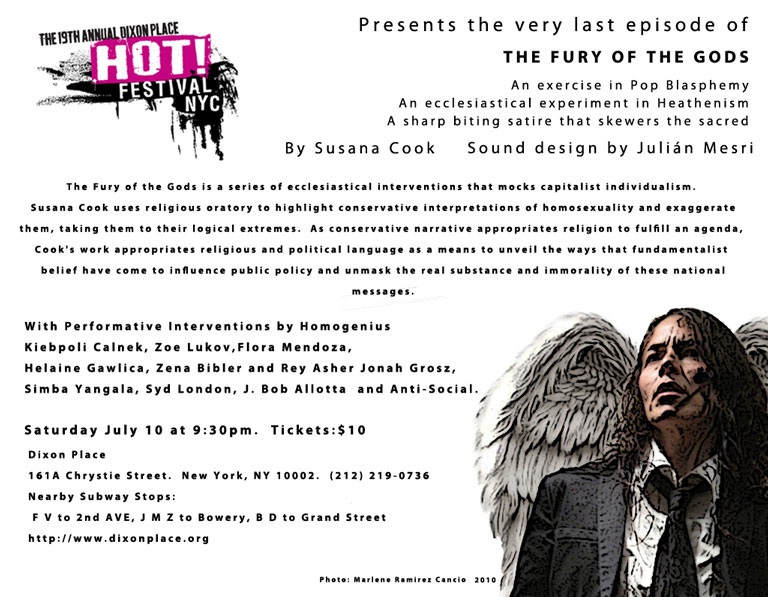
Wednesday, June 09, 2010
Food?
Today I went into a regular supermarket after a longtime of eating Urban Organic. I felt I was in a prophetic exhibit from the 80s showing how food was gonna look in the year 2010. I knew that if I stayed 10 more minutes that stuff was gonna start looking like food again.
Sunday, June 06, 2010
Bleaching Arizona
ethnic cleansing in the heart of the US.
Do they really believe in an an impermeable border?
They might kill a lot of people but they dream will not become true
Do they really believe in an an impermeable border?
They might kill a lot of people but they dream will not become true
Wednesday, May 12, 2010
Hirst, Damien. Mother and Child, Divided, 1993
Dead body in a container by Susana Cook
Hirst, Damien. Mother and Child, Divided, 1993
Hirscht is reputed to be the richest living artist in the world. Most of his work relies in using animals as a metaphor for humans. I see his art as very consistent with the norm, relying more in signification and exploitation than in craft.
Mother and Child, Divided, consists of a cow and a calf each sliced in half, and put in a box full of formaldehyde solution. According to critics in this piece Hirst is exploring ideas of death. His artistic genius consists in ordering the death and cutting in half of a big amount of cows that will be exhibited in different parts of the world. The cut animals that Hirst presents in his exhibits usually begin to decay before the exhibit it’s over so they have to be replaced by new ones, making his art work a series of unnecessary deaths.
If the beauty of his craft would reside in the composition of the installation, a fake cow would do the trick. But the main part of his piece is that the cow is real, that it was killed and cut in half for the exhibit. So in this case the piece is a spectacle of cruelty and human supremacy over animals more than a piece of art in the aesthetic sense of the term.
Hirst explorations on death went onto bigger animals, in 2006 he exhibited a pickled shark. The piece was titled "The Physical Impossibility of Death in the Mind of Someone Living". Hirst is inviting the audience to think about death. What is not clear is what is that he wants us to think about it. There are many thoughts we could have about death. The first one that comes to mind when watching his work is: the life or death of an animal doesn’t have the same value as the life and death of a human.
What interests me about this kind of art is the huge amount of meanings and significations that emanate from the piece and the way the art world decides to select the meanings in order to attribute value to a piece that ultimately reinforces and perpetrates the status quo and the constant exploitation and slavery of animals by humans. The selection of the artists that will reach fame is not innocent or arbitrary or based on talent.
Hirst has to overpass several regulations and laws in many countries in order to stage his work. The bans on British beef in Japan for example, stopped the cows at the airport in 2006. But every time he manages to bypass laws and regulations, the cows clear customs and the exhibit ends up taking place in very important museums around the world. This kind of work not only ends up getting all the necessary permissions and passports but it also gets highly rewarded.
Hirst is not the only artist torturing or killing animals as art work. The artist Marco Evaristti, for example, at Trapholt art museum in Denmark, put goldfish in a blender, and the visitors were given the option of pressing the “on” button. As a result many of the fish were of course liquidized. In August 2007 the artist from Costa Rica Guillermo Vargas featured a dog confined in a bare art gallery floor without food, water or bedding until it starved to death and after this exhibit he was chosen to represent his country at the Bienal centroamericana Honduras 2008. And the list goes on.
Why is it that humans are not a metaphor for humans? What would happen if Demain Hirst would exhibit the body of a human mother and her child cut in half in a box full of formaldehyde solution? What if we were invited to liquidized a fetus? What would happen if we were to trap a person in a gallery without food or water until she dies? The exhibits would certainly be banned, illegal and the artists would end up in jail. That would be considered murder. But killing an animal for artistic purposes is considered rebellious. It makes the artist respectable, filled with international recognition and rich.
Work cited:
Hirst, Damien. Mother and Child, Divided, 1993
Steel, GRP composites, glass, silicone sealants, cow, calf, formaldehyde solution; dimensions variable.
http://www.art-in-guelph.com/Pages/FishBlender.html
Hirst, Damien. Mother and Child, Divided, 1993
Hirscht is reputed to be the richest living artist in the world. Most of his work relies in using animals as a metaphor for humans. I see his art as very consistent with the norm, relying more in signification and exploitation than in craft.
Mother and Child, Divided, consists of a cow and a calf each sliced in half, and put in a box full of formaldehyde solution. According to critics in this piece Hirst is exploring ideas of death. His artistic genius consists in ordering the death and cutting in half of a big amount of cows that will be exhibited in different parts of the world. The cut animals that Hirst presents in his exhibits usually begin to decay before the exhibit it’s over so they have to be replaced by new ones, making his art work a series of unnecessary deaths.
If the beauty of his craft would reside in the composition of the installation, a fake cow would do the trick. But the main part of his piece is that the cow is real, that it was killed and cut in half for the exhibit. So in this case the piece is a spectacle of cruelty and human supremacy over animals more than a piece of art in the aesthetic sense of the term.
Hirst explorations on death went onto bigger animals, in 2006 he exhibited a pickled shark. The piece was titled "The Physical Impossibility of Death in the Mind of Someone Living". Hirst is inviting the audience to think about death. What is not clear is what is that he wants us to think about it. There are many thoughts we could have about death. The first one that comes to mind when watching his work is: the life or death of an animal doesn’t have the same value as the life and death of a human.
What interests me about this kind of art is the huge amount of meanings and significations that emanate from the piece and the way the art world decides to select the meanings in order to attribute value to a piece that ultimately reinforces and perpetrates the status quo and the constant exploitation and slavery of animals by humans. The selection of the artists that will reach fame is not innocent or arbitrary or based on talent.
Hirst has to overpass several regulations and laws in many countries in order to stage his work. The bans on British beef in Japan for example, stopped the cows at the airport in 2006. But every time he manages to bypass laws and regulations, the cows clear customs and the exhibit ends up taking place in very important museums around the world. This kind of work not only ends up getting all the necessary permissions and passports but it also gets highly rewarded.
Hirst is not the only artist torturing or killing animals as art work. The artist Marco Evaristti, for example, at Trapholt art museum in Denmark, put goldfish in a blender, and the visitors were given the option of pressing the “on” button. As a result many of the fish were of course liquidized. In August 2007 the artist from Costa Rica Guillermo Vargas featured a dog confined in a bare art gallery floor without food, water or bedding until it starved to death and after this exhibit he was chosen to represent his country at the Bienal centroamericana Honduras 2008. And the list goes on.
Why is it that humans are not a metaphor for humans? What would happen if Demain Hirst would exhibit the body of a human mother and her child cut in half in a box full of formaldehyde solution? What if we were invited to liquidized a fetus? What would happen if we were to trap a person in a gallery without food or water until she dies? The exhibits would certainly be banned, illegal and the artists would end up in jail. That would be considered murder. But killing an animal for artistic purposes is considered rebellious. It makes the artist respectable, filled with international recognition and rich.
Work cited:
Hirst, Damien. Mother and Child, Divided, 1993
Steel, GRP composites, glass, silicone sealants, cow, calf, formaldehyde solution; dimensions variable.
http://www.art-in-guelph.com/Pages/FishBlender.html
Subscribe to:
Posts (Atom)